
Ask five different roofing contractors what “the best metal roof” looks like, and you’ll probably get five different answers. That’s because metal roofing isn’t one product — it’s a whole category, ranging from bare corrugated steel sheets to standing seam panels to the stone-coated shingles that have become one of the fastest-growing choices in the U.S. residential market. Stone coated metal roofing sits in an interesting spot within that category: it has the strength and lifespan people expect from metal, but it’s built to look like something else entirely — shake, slate, or traditional shingles. If you’re weighing your options for a re-roof or a new build, it helps to understand where stone coated systems fit before you commit to anything.
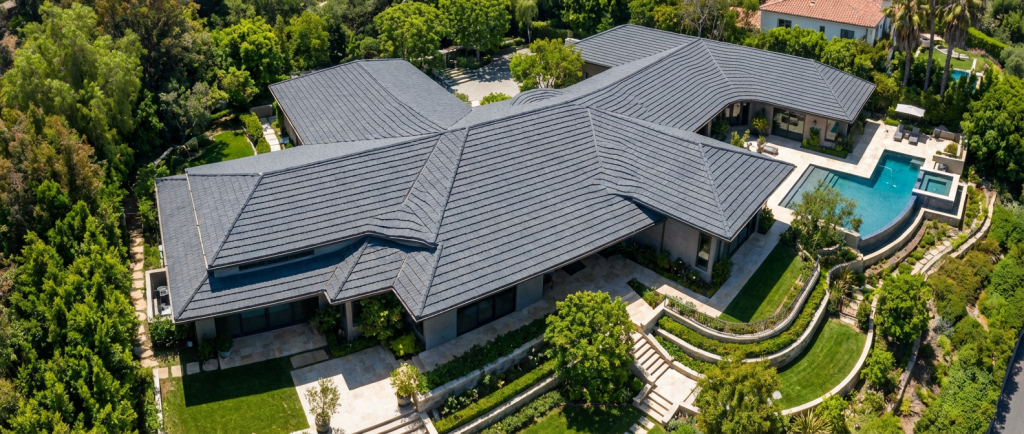
Where Stone Coated Roofing Fits Among Metal Roofing Materials
Most people searching for metal roofing materials are really comparing a handful of finish types: exposed-fastener corrugated panels, standing seam, aluminum systems, and stone coated steel. Each one solves a slightly different problem.
Exposed-fastener panels are the workhorse of agricultural and light commercial buildings — inexpensive, fast to install, but visually utilitarian and prone to fastener wear over time. Standing seam is the polished, modern-looking option you’ll see on architect-designed homes and commercial buildings, with hidden fasteners and clean vertical lines. Aluminum systems trade a bit of strength for excellent corrosion resistance, which is why they show up so often in coastal markets.
Stone coated steel takes a different approach. Instead of leaning into the “metal look,” it’s engineered to disguise itself as shake, slate, or dimensional shingles, using a base of galvanized or Galvalume steel finished with an acrylic-bonded layer of natural stone granules. The result is a roof that reads as traditional from the curb, but performs structurally more like the steel panel it actually is underneath. For homeowners in neighborhoods with HOA restrictions on “obvious” metal roofing, or anyone who simply prefers the texture of shingles over smooth panels, this is often the deciding factor.
Why Homeowners Choose Metal Over Traditional Shingles
The “shingles or metal” debate comes up constantly, and it’s rarely as simple as one side winning outright. Asphalt shingles are cheaper upfront and familiar to every contractor in the country, which counts for something. But metal roofing — stone coated systems included — tends to win on the things that matter over a 20- or 30-year ownership window.
Lifespan is the obvious one. A typical asphalt roof needs replacing every 15 to 25 years, while a stone coated metal roof commonly carries warranties in the 40- to 50-year range. Wind and impact performance matter too, especially in the Midwest and Southeast, where hail and severe storms are a regular part of the calculation — many stone coated products carry Class 4 impact ratings, which can translate into real insurance premium savings.
Heat performance is another factor that doesn’t get enough attention. In hot climates, a metal roof with reflective coating can noticeably reduce attic temperatures compared to dark asphalt shingles, which is part of why “metal roof vs shingles in hot climate” is such a heavily searched comparison in southern states. Add in the energy efficiency benefits of a reflective, well-ventilated metal system, and the long-term utility savings start to offset the higher initial price fairly quickly.
What a Stone Coated Metal Roof Costs
Cost is where most decisions actually get made, so it’s worth being direct about the numbers. In the U.S. market, installed pricing for stone coated metal shingles generally falls between $9 and $14 per square foot — noticeably higher than asphalt shingles at $4.50 to $7.50 per square foot, but usually below natural slate or clay tile, which can run $15 to $30 or more per square foot once you factor in the additional structural work heavier materials often require.
A few things move that number in either direction. Roof complexity — the number of valleys, hips, and penetrations — adds labor time regardless of material. Region matters as well; a project in Florida or along the Gulf Coast will often carry higher costs due to wind and impact code requirements, while pricing in the Midwest tends to sit closer to the national average. And if your existing roof deck is in good shape, installing over the existing asphalt shingles rather than doing a full tear-off can meaningfully reduce the total project cost — something worth asking a contractor about directly rather than assuming it isn’t possible.
Installation: What to Expect
Putting on a metal roof is a different process than a standard asphalt shingle job, and it’s worth understanding the basics even if you’re hiring the work out. Stone coated panels are typically installed over synthetic or self-adhering underlayment, sometimes with battens depending on the manufacturer’s system, and the panels interlock as they go up rather than being individually nailed like shingles. Ridge caps, flashing, and trim details at valleys and penetrations tend to be where installation quality really shows — a rushed or inexperienced crew will often cut corners exactly there.
Because the panels cover more surface area per piece than individual shingles, a well-run crew can often move through a stone coated installation at a comparable pace to a full asphalt tear-off, even though the material itself requires more precision. If you’re comparing contractors, it’s worth asking specifically about their experience with interlocking metal panel systems rather than assuming general roofing experience transfers directly.
Colors, Styles, and Getting the Look Right
One of the more underrated advantages of stone coated roofing is how much design flexibility it offers compared to standard metal panels. Profiles are typically available in shake, shingle, and tile styles, which means the same underlying material can suit a rustic farmhouse, a coastal ranch home, or a more traditional colonial-style build without looking out of place in any of them.
Color selection has expanded considerably too. Charcoal gray and pewter tones remain the most popular choices nationally, but lighter colors have gained traction specifically for their heat-reflective properties in hot climates, and earth-tone blends are common in regions where homeowners want the roof to read as a natural material rather than an obvious upgrade. If you’re unsure what will actually look right on your house, asking a supplier for physical color samples rather than relying on photos online is worth the extra step — stone coated finishes can shift noticeably in appearance depending on lighting and surrounding siding colors.
Maintenance: Lower, Not Zero
Metal roofing gets marketed as low-maintenance, and relative to asphalt, it is. But “low” isn’t “none.” Debris buildup in valleys, occasional fastener or seam inspection, and keeping gutters clear all still matter for long-term performance. Coating restoration is a topic that comes up more with older, uncoated or lightly coated steel panels than with quality stone coated systems, since the acrylic-bonded stone layer holds up considerably better against UV fading than paint alone. Still, a periodic visual inspection — particularly after major storms — is a reasonable habit regardless of how durable the material is on paper.
Sourcing Stone Coated Metal Roofing: What Actually Matters
For contractors, distributors, and anyone buying at scale rather than for a single home, the manufacturer behind the product often matters more than the spec sheet suggests. Steel gauge and coating quality vary more between suppliers than most buyers expect, and a lower price per square foot doesn’t always account for differences in long-term coating adhesion, color retention, or wind and impact certification.
It’s worth asking any supplier directly about third-party testing — UL or ASTM certification, and regional wind/impact approvals where relevant, such as Miami-Dade or Florida Building Code compliance for coastal projects. For buyers importing product or ordering wholesale volume, freight efficiency and consistent batch quality across large orders are just as important as the material specifications themselves, since inconsistency between shipments tends to show up as installation problems down the line rather than as an obvious defect at the point of sale.
A Few Common Questions
Is stone coated metal roofing worth the extra cost compared to asphalt? For most homeowners planning to stay in the home long-term, yes — the combination of lifespan, impact resistance, and potential insurance savings usually offsets the higher upfront price within a reasonable ownership window.
Can it be installed over an existing roof? Often, yes, provided the deck is in sound condition and local code allows it. It’s a question worth raising directly with your contractor rather than assuming either way.
Does color affect performance, not just appearance? Somewhat. Lighter colors reflect more heat, which can measurably reduce attic temperatures in hot climates, though the difference is more noticeable in southern regions than in cooler ones.
How does it hold up in hail-prone areas? Generally well. Many stone coated products carry Class 4 impact ratings, which is the highest classification for hail resistance and is often recognized by insurers with premium discounts.
Final Thoughts
Metal roofing has become a broad enough category that the real question isn’t “metal or not” so much as “which type of metal roof actually fits this project.” Stone coated systems earn their place by solving a specific tension — offering the durability and lifespan people want from steel, without giving up the traditional look that a lot of homeowners and neighborhoods still expect from a roof. Whether you’re planning a single re-roof or sourcing material for a larger contracting or distribution business, understanding where stone coated roofing fits relative to asphalt, standard metal panels, and heavier materials like tile or slate makes it a lot easier to land on the right choice instead of just the most heavily marketed one.