
How long does stone coated metal roofing last? It’s one of the first questions we get from homeowners and contractors evaluating this system against traditional asphalt shingles — and the honest answer requires looking past the “50-year warranty” number printed on marketing brochures. As a manufacturer, we think it’s more useful to explain the actual engineering behind that lifespan, so buyers understand exactly what they’re paying for and why.
The Marketing Number vs. the Engineering Reality
Most reputable stone coated metal roofing manufacturers, including Hori Roofing, back their panels with 40 to 50-year limited warranties, and many installed roofs are still performing well past that window. Compare that to asphalt shingles, which typically carry 15-30 year warranties but often need replacement or significant repair within 15-20 years in harsh climates, or wood shakes, which frequently require maintenance within a decade.
But a warranty number alone doesn’t explain why the material lasts that long. To understand real-world longevity, you have to look at three separate layers of the product: the steel substrate, the corrosion-resistant coating beneath the stone, and the stone chip layer itself.
Layer One: The Steel Substrate
The base of a stone coated metal panel is cold-rolled steel, typically in 26 or 29 gauge thickness. Thicker gauge steel resists denting and fatigue better over decades of thermal expansion and contraction, which is why gauge thickness is one of the first specifications a knowledgeable buyer should ask about when comparing suppliers.
Layer Two: The Corrosion Barrier
This is the layer most homeowners never think about, but it’s arguably the most important for long-term durability. Before the stone coating is applied, the steel is coated with a zinc-aluminum alloy (commonly Galvalume or similar AZ-coated steel). This layer is what actually prevents rust from forming if the outer stone coating is ever scratched or chipped.
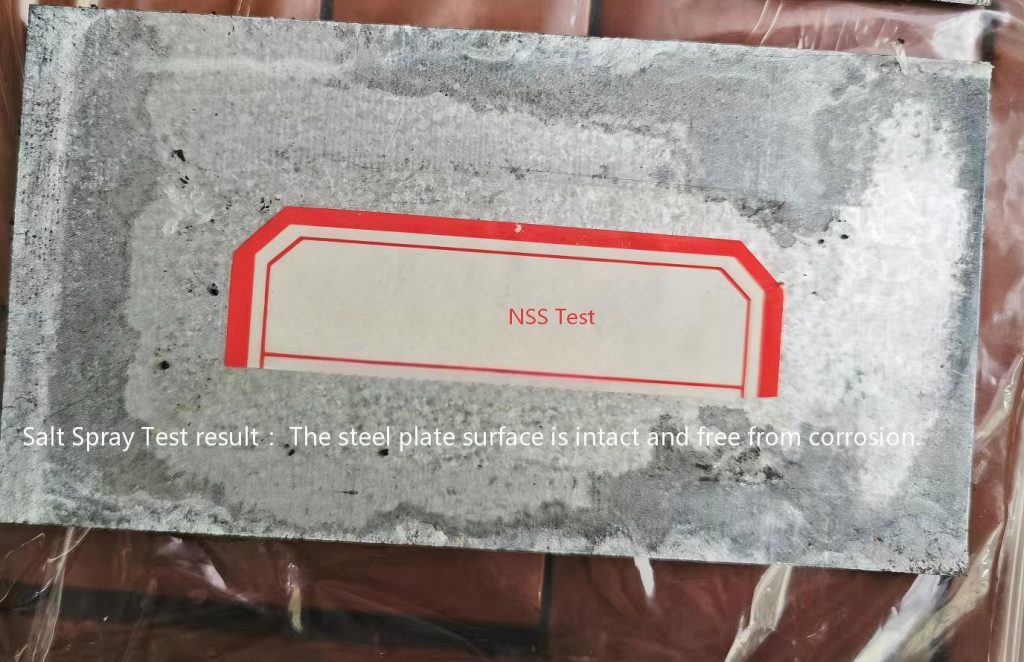
Manufacturers test this corrosion resistance using ASTM B117, the standard salt spray test used across the steel and coatings industry. In this test, coated steel samples are placed in a controlled salt-fog chamber for extended periods — often 1,000+ hours for quality roofing steel — and evaluated for red rust formation. Panels that hold up significantly longer than the industry baseline in this test are a strong indicator of a roof that will resist corrosion in coastal, humid, or freeze-thaw climates for decades.
Layer Three: The Stone Coating
The visible stone granules aren’t just decorative — they’re bonded to the steel with an acrylic resin that protects the metal from UV degradation and provides the textured, non-reflective finish homeowners expect from a residential roof. Over time, in a well-manufactured panel, this bond resists cracking, fading, and granule loss far better than the asphalt mat and granule layer on a traditional shingle, which is one reason stone coated roofs tend to hold their appearance for so much longer.
What Actually Shortens a Stone Coated Metal Roof’s Life
Even a well-engineered system can underperform if a few real-world factors aren’t accounted for:
- Improper installation. Fastener spacing, underlayment choice, and flashing details matter enormously with metal roofing. A poorly installed roof can develop leaks or panel movement issues regardless of the material’s inherent quality.
- Coastal salt exposure. Homes within a mile or two of saltwater need a coating package rated for higher corrosion resistance, which is why ASTM B117 test hours matter when sourcing panels for coastal markets.
- Dissimilar metal contact. Direct contact between the panel and certain other metals (like uncoated aluminum flashing) can accelerate corrosion through galvanic reaction if not properly isolated during installation.
- Skipped maintenance. While stone coated metal roofing requires far less maintenance than asphalt or wood, periodic inspection of flashing, sealant points, and fastener integrity still extends service life meaningfully.
Why This Matters More for Metal Than for Asphalt
With asphalt shingles, lifespan is largely a function of UV exposure and granule loss — a fairly predictable, linear decline. With metal roofing, lifespan is a function of coating system integrity, which means it can either dramatically outperform its warranty period (common) or underperform if a cheap, thin, or poorly tested coating package was used (less common, but it happens with lower-cost imported products that skip rigorous salt spray testing).
This is exactly why, when sourcing stone coated metal roofing — whether as a homeowner, contractor, or distributor — it’s worth asking for actual ASTM B117 test data and steel gauge specifications rather than relying on a warranty number alone. Two roofs can look identical on a spec sheet and perform very differently after 15 years in a humid or coastal climate.
Our Approach at Hori Roofing
Because our panels are manufactured for distribution into demanding U.S. climate zones — from the humid Gulf Coast to freeze-thaw regions in the Midwest and Northeast — we build our coating system to exceed standard salt spray benchmarks, using heavier gauge steel and a high-adhesion granule bonding process. We provide test documentation to our distribution and contractor partners so they can verify performance claims rather than take them on faith.
The Bottom Line
So, how long does stone coated metal roofing last? In real-world terms, a properly engineered and correctly installed system will commonly perform for 40-50+ years, often outliving the original homeowner’s time in the house. The number on the warranty is really just a reflection of three things working together correctly: solid steel, a proven corrosion barrier, and a well-bonded stone coating — which is exactly what to verify before choosing a supplier.
Want to review Hori Roofing’s ASTM B117 test results and steel specifications before your next project? Reach out to our technical team.